Home › Electromagnetic Flow Meter
Electromagnetic Flow Meter
Principle, Selection Guide & Applications
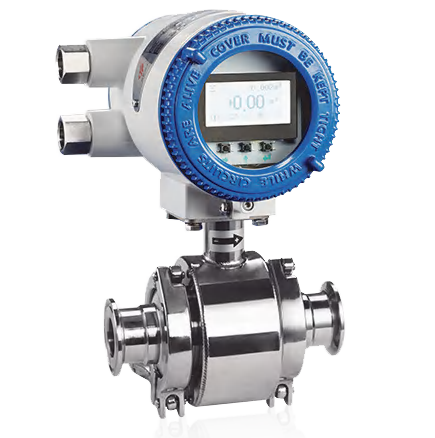
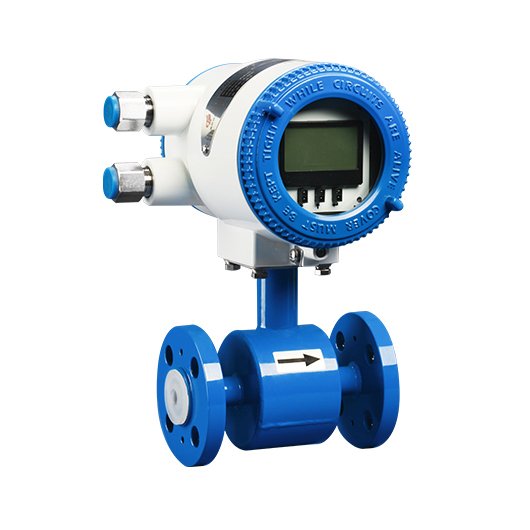
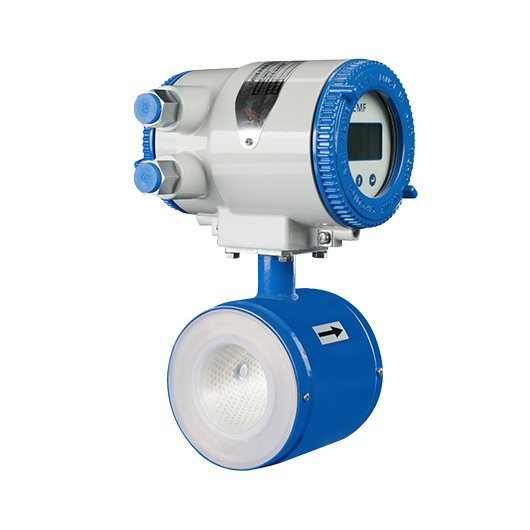
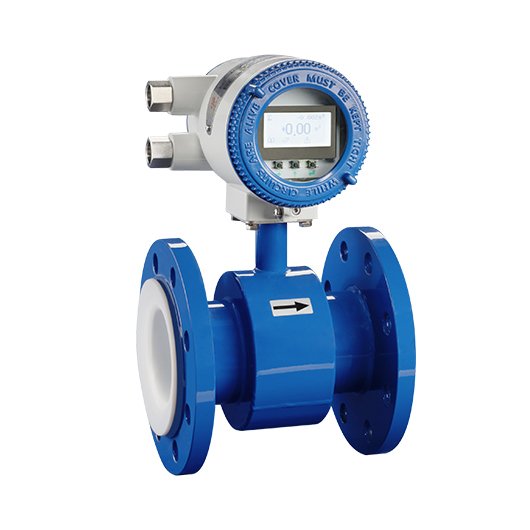
An electromagnetic flow meter, also known as a magnetic flow meter or magmeter, measures the volumetric flow rate of electrically conductive liquids. It is widely used for water, wastewater, chemicals, slurry, food and beverage, pharmaceutical liquids and other conductive process fluids.
Unlike mechanical flow meters, electromagnetic flow meters have no moving parts inside the measuring tube, resulting in virtually no additional pressure loss and low maintenance requirements.
This guide explains how electromagnetic flow meters work, how to select the right model, where they are used, and how they compare with other flow meter technologies.
Table of Contents
How Does an Electromagnetic Flow Meter Work?
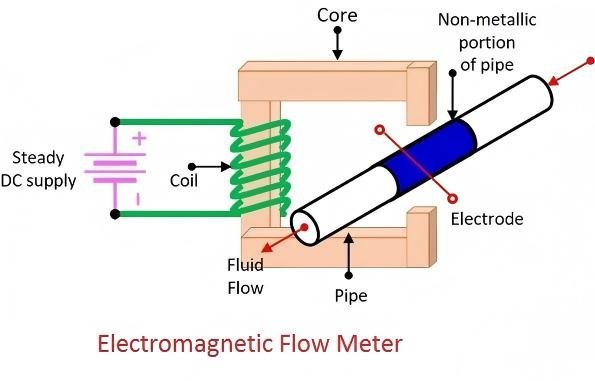
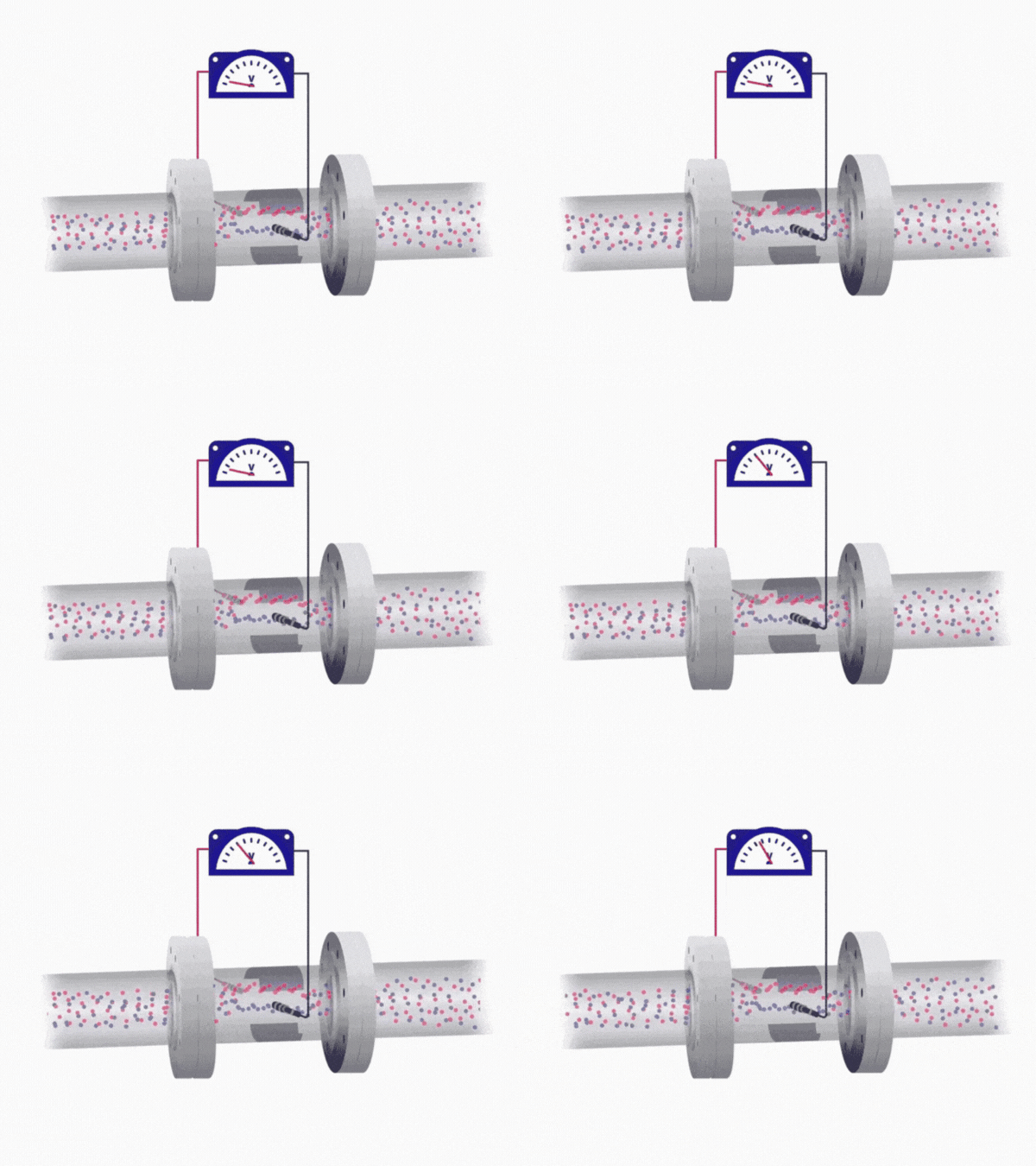
Electromagnetic flow meters operate according to Faraday’s law of electromagnetic induction.
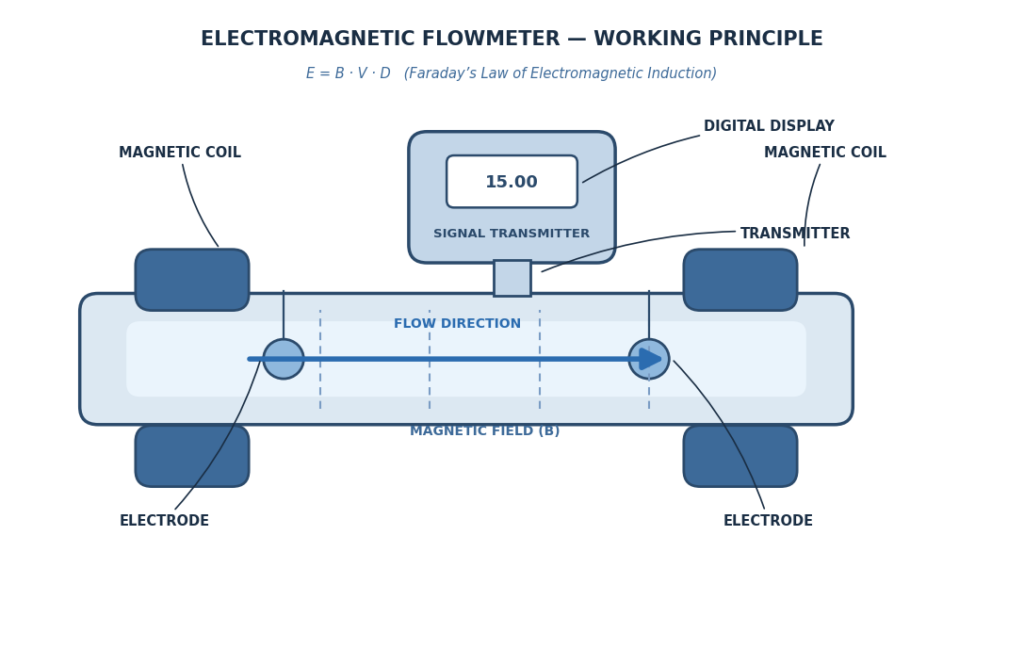
The sensor generates a magnetic field across the measuring tube. When a conductive liquid flows through this magnetic field, a small electrical voltage is induced. Electrodes detect the voltage and the converter converts it into flow velocity.
The basic relationship is:
E = B × L × v
Where:
- E = induced voltage
- B = magnetic field strength
- L = electrode spacing
- v = liquid velocity
The volumetric flow rate is then calculated from:
Q = v × A
Where Q is flow rate and A is the internal cross-sectional area of the measuring tube.
Because there are no mechanical measuring elements inside the pipe, electromagnetic flow meters are well suited to liquids containing suspended solids and applications where pressure loss and mechanical wear need to be minimized.
What Can an Electromagnetic Flow Meter Measure?
The most important requirement is electrical conductivity.
Standard electromagnetic flow meters are typically used for conductive liquids such as:
- Water
- Wastewater
- Cooling water
- Chemicals
- Acids and alkalis
- Slurry
- Pulp
- Milk and beverages
- Pharmaceutical liquids
The required minimum conductivity depends on the meter design. Standard industrial models commonly require conductivity of several μS/cm or higher, while specialized low-conductivity electromagnetic flow meters can measure liquids with significantly lower conductivity.
What Cannot Be Measured?
Conventional electromagnetic flow meters are generally not suitable for:
- Air
- Nitrogen
- Oxygen
- Natural gas
- Steam
- Most non-conductive hydrocarbons and oils
For these applications, consider thermal mass, vortex, Coriolis, ultrasonic or differential-pressure flow meters, depending on the medium and process conditions.
Electromagnetic Flow Meter vs. Other Flow Meters
Different flow meter technologies are suitable for different media and process requirements.
| Flow Meter | Typical Medium | Main Strength | Main Limitation |
|---|---|---|---|
| Electromagnetic | Conductive liquids | No moving parts, low pressure loss, slurry capable | Requires conductive liquid |
| Coriolis | Liquids & gases | Direct mass flow and density measurement | Higher cost |
| Vortex | Steam, gas & liquids | Suitable for steam and gas | Requires suitable flow conditions |
| Turbine | Clean liquids & gases | Good repeatability | Moving parts and wear |
| Ultrasonic | Liquids & gases | Non-intrusive options available | Performance depends on medium and installation |
| DP Flow Meter | Liquids, gas & steam | Broad industrial use | Pressure loss and permanent pressure drop |
| Positive Displacement | Viscous liquids | Accurate volumetric measurement | Moving parts and pressure loss |
Advantages of Electromagnetic Flow Meters
No Moving Parts
No rotor, turbine or mechanical measuring element means less mechanical wear and maintenance.
Virtually No Pressure Loss
The measuring tube has no internal obstruction, making electromagnetic flow meters suitable for applications where pressure loss must be minimized.
Suitable for Slurry
Conductive liquids containing suspended solids can be measured without mechanical moving parts.
Wide Measurement Range
Many electromagnetic flow meters provide a wide turndown ratio and stable measurement across varying flow rates.
Bidirectional Measurement
Many models can measure both forward and reverse flow.
Low Sensitivity to Fluid Properties
The measurement principle is largely independent of liquid density and viscosity, making it suitable for many variable process conditions.
When Should You Choose an Electromagnetic Flow Meter?
An electromagnetic flow meter is particularly suitable when:
- The medium is an electrically conductive liquid
- The liquid contains suspended solids
- Low pressure loss is important
- Mechanical wear should be minimized
- The application involves water or wastewater
- The liquid is corrosive and requires a suitable liner
- The process requires bidirectional flow measurement
- A wide flow range is required
Consider another technology when the medium is gas, steam or a non-conductive liquid.
Common Electromagnetic Flow Meter Applications
Water & Wastewater
Raw water, treated water, cooling water, sewage and industrial wastewater.
Chemical Processing
Acids, alkalis, chemical solutions and other corrosive process liquids.
Mining & Slurry
Ore slurry, tailings, pulp, mud and other conductive solid-liquid mixtures.
Food & Beverage
Milk, juice, beer, beverages and liquid ingredients.
Pharmaceutical
Pharmaceutical liquids, hygienic process fluids and dosing systems.
Low-Conductivity Liquids
Purified water and other liquids requiring specialized low-conductivity electromagnetic flow measurement.
Electromagnetic Flow Meter Selection Checklist
Before requesting a quotation, prepare:
| Parameter | Information Required |
|---|---|
| Medium | Liquid name / composition |
| Conductivity | μS/cm or mS/cm |
| Pipe Size | DN / inch |
| Flow Range | Min. / Normal / Max. |
| Temperature | Min. / Max. |
| Pressure | Normal / Maximum |
| Accuracy | Required accuracy |
| Liner | If specified |
| Electrode | If specified |
| Connection | Flange / wafer / clamp / thread |
| Output | 4–20 mA / Pulse |
| Communication | Modbus / HART / Other |
| Application | Water / chemical / slurry / sanitary |
| Special Requirements | Ex / CIP / SIP / etc. |
The most important parameters are medium, conductivity, pipe size, flow range, temperature and pressure.
Frequently Asked Questions
What information do I need to select an electromagnetic flow meter?
The key information includes the medium, minimum and maximum flow rate, pipe size (DN), process temperature, pressure, conductivity, connection type, accuracy requirement, and output or communication interface.
For chemical, slurry, sanitary or hazardous applications, material and certification requirements may also be required.
Can an electromagnetic flow meter measure any liquid?
No. Electromagnetic flow meters are designed for electrically conductive liquids. Common applications include water, wastewater, chemicals, acids, alkalis, slurry, pulp, food and beverage liquids.
Non-conductive liquids such as most oils and hydrocarbons generally cannot be measured reliably with a conventional electromagnetic flow meter.
What conductivity is required for an electromagnetic flow meter?
The required conductivity depends on the meter design. Standard electromagnetic flow meters require sufficient electrical conductivity, while specialized models are available for low-conductivity liquids.
If you are measuring purified water, DI water or another low-conductivity liquid, provide the actual conductivity when requesting a quotation so the appropriate model can be selected.
Why do I need to provide the minimum and maximum flow rate?
Pipe size alone is not enough to select an electromagnetic flow meter. The minimum, normal and maximum flow rates determine whether the meter can operate within its recommended measuring range and meet the required accuracy.
For example, a DN40 meter may not be suitable simply because the pipeline is DN40 if the actual flow is too low or too high.
Can an electromagnetic flow meter measure slurry or liquids containing solids?
Yes. Electromagnetic flow meters are suitable for many conductive liquids containing suspended solids, including wastewater, mining slurry, pulp and other solid-liquid mixtures.
For high-concentration or abrasive slurry, the liner and electrode materials should be selected according to the solids concentration, particle characteristics and chemical properties.
Can an electromagnetic flow meter measure oil, gas or steam?
A conventional electromagnetic flow meter is not suitable for most oils, gases or steam.
It requires an electrically conductive liquid. For oil, gas or steam applications, other technologies such as Coriolis, positive displacement, thermal mass, vortex or differential pressure flow meters may be more appropriate depending on the application.
Does an electromagnetic flow meter require a full pipe?
Yes. The measuring tube should normally remain completely filled with liquid during operation.
A partially filled pipe, excessive air bubbles or an unsuitable installation location can cause unstable or inaccurate readings. Proper installation and grounding are also important for reliable measurement.
What should I check if my electromagnetic flow meter is reading incorrectly?
First check the actual flow range, liquid conductivity, full-pipe condition, air bubbles, grounding, installation, wiring and configuration parameters.
For chemical or slurry applications, also check whether the selected electrode and liner materials are compatible with the medium. If the problem remains, provide the process conditions and meter parameters for further troubleshooting.
Find the Right Electromagnetic Flow Meter
Measflow provides electromagnetic flow meters for a wide range of conductive liquid applications, including:
- Standard industrial liquids
- Water and wastewater
- Low-conductivity liquids
- Chemical fluids
- Slurry
- Food and beverage
- Pharmaceutical processes
- Ultra-low-flow applications
- Sanitary processes
Explore the Measflow electromagnetic flow meter range or send your application details for a suitable configuration.
Need help selecting a magnetic flow meter?
Send us your medium, conductivity, pipe size, minimum/normal/maximum flow, temperature and pressure.