Measflow mass flow controllers provide precise gas flow measurement and closed-loop flow control for industrial processes, laboratory equipment, gas mixing systems and semiconductor-related applications.
From low-flow gas dosing to higher-capacity process control, we offer thermal, differential pressure and Coriolis mass flow controller solutions based on your gas type, flow range and operating conditions.
Mass Flow Controller Product Range
Choose the appropriate mass flow controller technology according to your gas properties, required flow range, accuracy and process conditions.
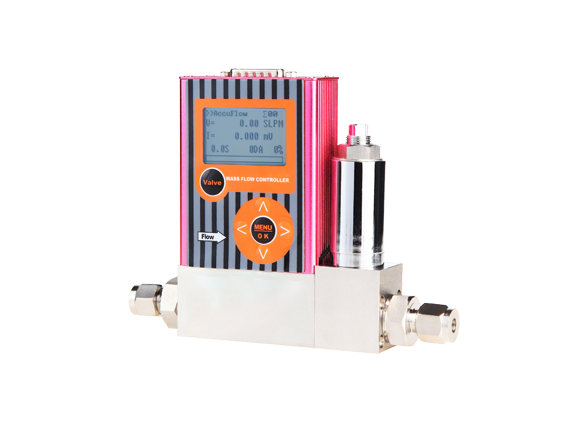
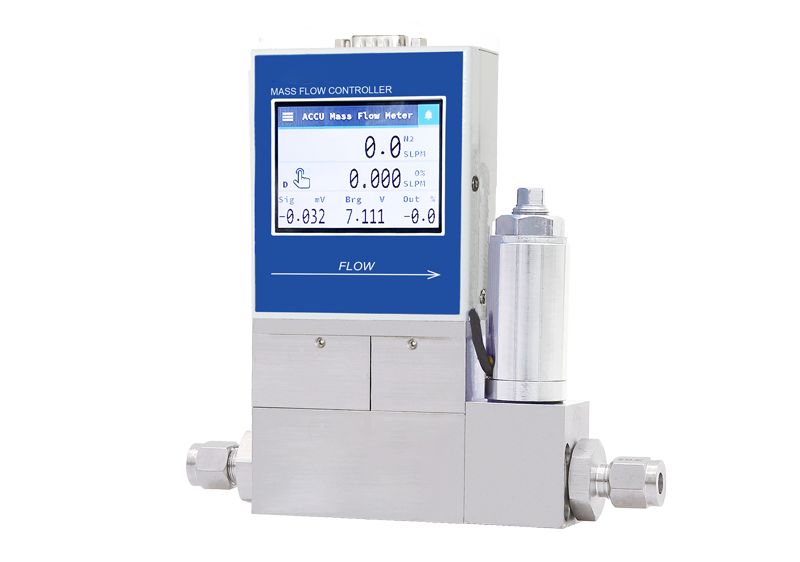
1. Digital Thermal Mass Flow Controller
Thermal mass flow controllers are designed for gas flow measurement and control in a wide range of industrial and laboratory applications. Digital models can support electronic flow setting, measurement feedback and configurable communication interfaces.
Suitable for many common process gases
Compact design for equipment integration
Configurable analog and digital interfaces
Multiple flow ranges available
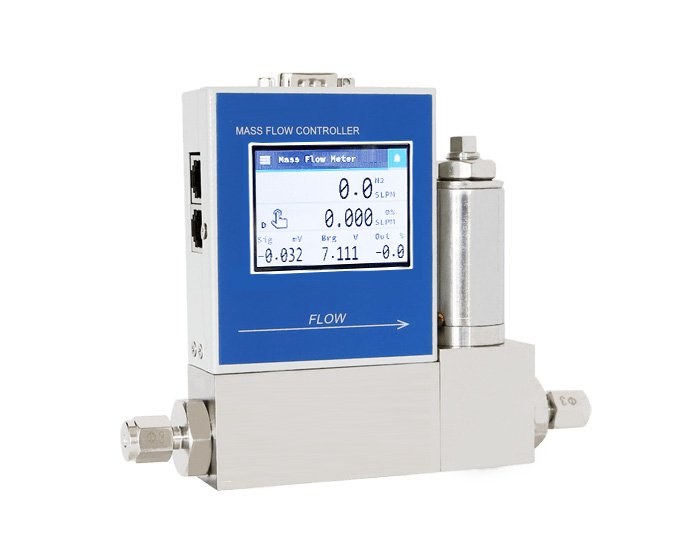
2. Differential Pressure Mass Flow Controller
Differential pressure mass flow controllers use differential pressure measurement and a control valve to regulate gas flow. They are suitable for selected applications requiring stable flow control under defined pressure conditions.
Differential pressure-based measurement
Closed-loop flow regulation
Configurable pressure and flow ranges
Options for equipment and process integration
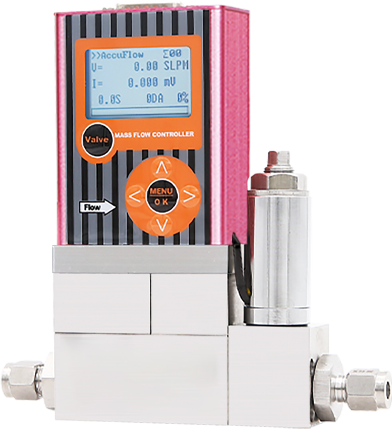
3. Coriolis Mass Flow Controller
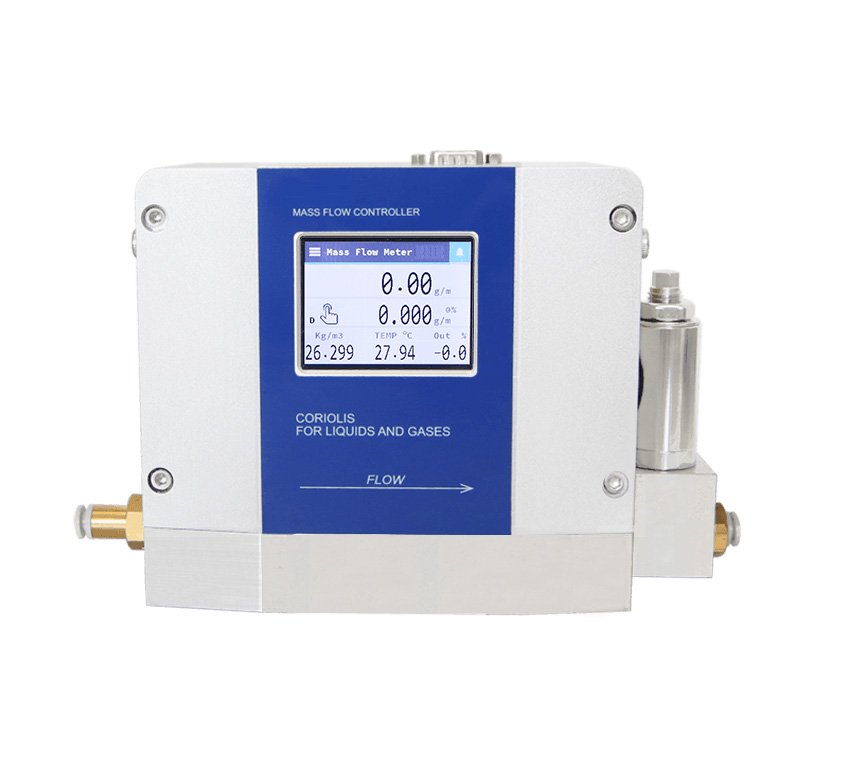
Coriolis-based solutions are designed for applications requiring direct mass flow measurement. Depending on the model, they can support gas or liquid measurement and control for demanding process requirements.
Direct mass flow measurement
Suitable for selected gas and liquid applications
High-precision process dosing options
Model-specific flow and pressure configurations
How Does an MFC Work?
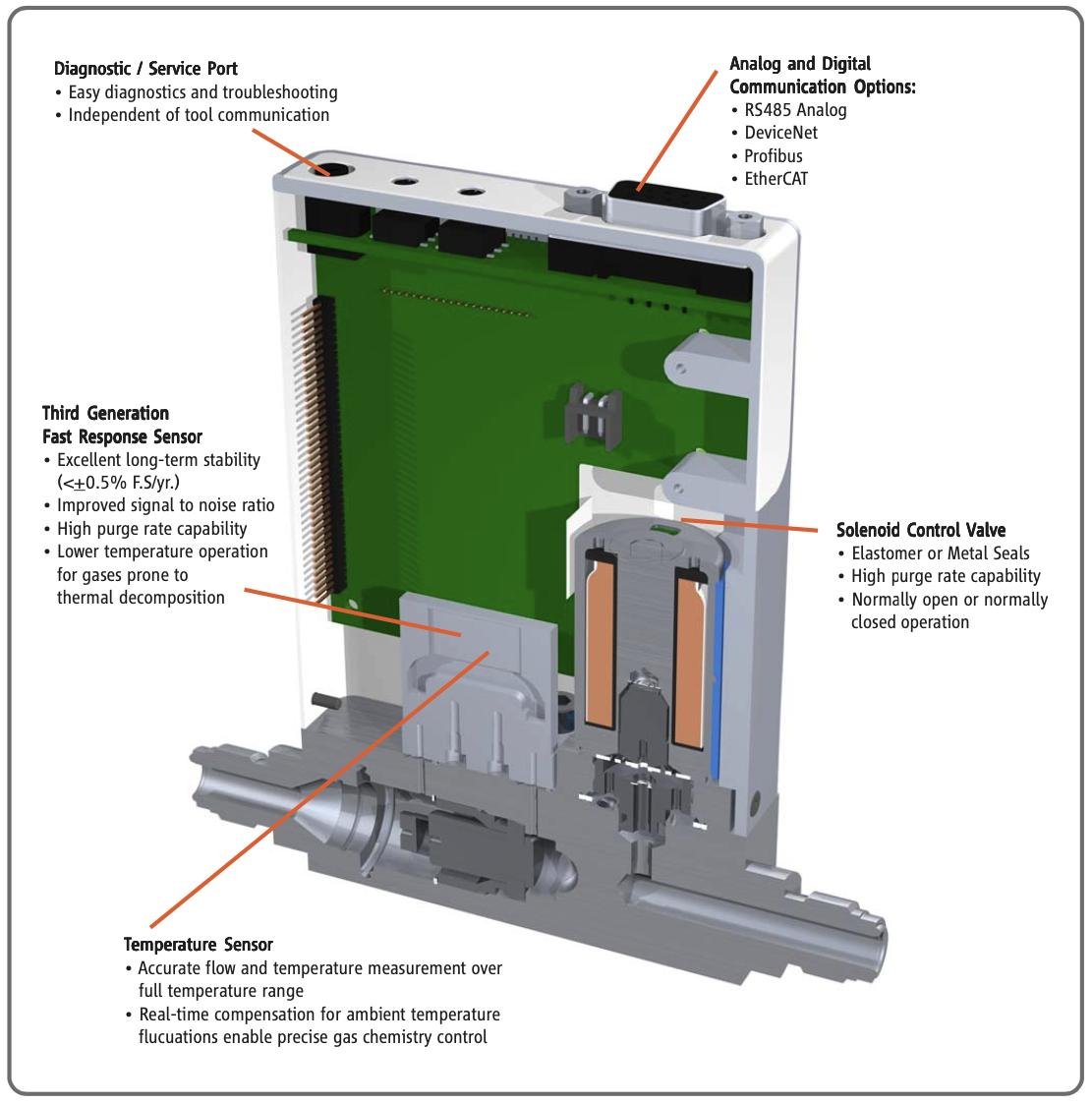
A mass flow controller combines a flow sensor, electronic control circuit and proportional control valve to regulate flow automatically.
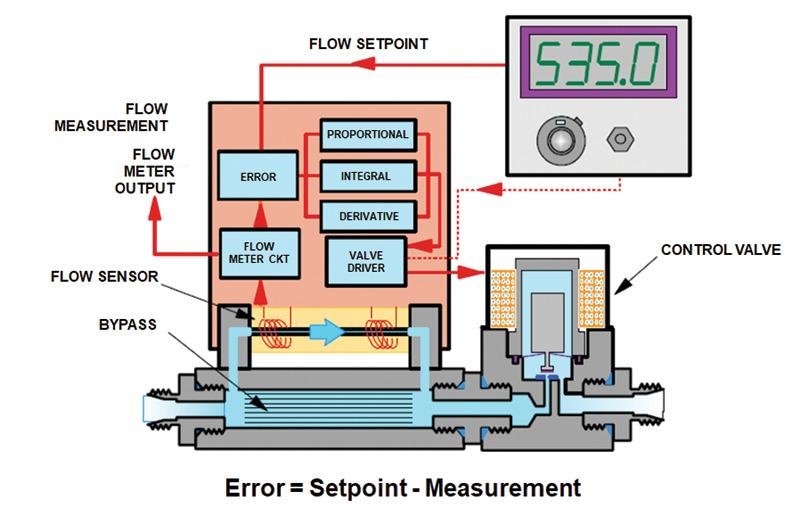
The controller measures the actual gas flow and compares it with the user-defined setpoint. The control circuit then adjusts the valve opening to minimize the difference between the measured flow and the target flow.
The control process continuously repeats to maintain the desired flow under suitable operating conditions.
Set the target flow: Enter the required flow rate through a supported analog signal, digital interface or local control system.
Measure the actual flow: The sensor detects the gas flow passing through the instrument.
Compare the flow values: The control circuit compares the measured flow with the setpoint.
Adjust the control valve: The valve opening changes automatically to bring the flow closer to the target value.
Unlike a mass flow meter (MFM), which measures flow without actively regulating it, an MFC combines measurement with automatic flow control.
Why Choose Measflow Mass Flow Controllers?
Precise Flow Control
Select a suitable model according to your accuracy, repeatability and process stability requirements.
Flexible Flow Ranges
Solutions for low-flow dosing and higher-capacity gas control, subject to model specifications.
Multiple Signal Options
Available configurations may include 4–20 mA, voltage signals and digital communication.
Application-Based Configuration
Flow range, gas calibration, pressure rating and connections can be evaluated against your requirements.
Mass Flow Controller Applications
Semiconductor and Thin-Film Processing
Gas delivery, deposition, etching and process gas control, subject to required cleanliness and compatibility specifications.
Gas Mixing and Blending
Control individual gas streams for blending systems, calibration mixtures and process gas preparation.
Laboratory and Analytical Instruments
Stable gas flow delivery for analytical equipment, test benches and laboratory experiments.
Fuel Cell and Energy Research
Gas supply and flow regulation for fuel cell testing, hydrogen research and other energy-related processes.
Industrial Process Control
Gas dosing, combustion-related systems, process equipment and automated gas delivery applications.
Mass Flow Controller Selection Guide
Selecting the right MFC requires more than specifying the pipe size or nominal flow rate. Gas properties, operating pressure, required accuracy and available pressure differential all affect model suitability.
Selection parameter | Information to provide |
|---|---|
Gas type | N₂, Ar, O₂, H₂, CO₂, CH₄, NH₃ or gas mixtures |
Flow range | Minimum, normal and maximum flow |
Flow unit | SCCM, SLM, NL/min, L/min, g/h or other |
Operating pressure | Inlet pressure and outlet pressure |
Pressure differential | Available pressure drop across the MFC |
Temperature | Minimum and maximum operating temperature |
Accuracy | Required accuracy and repeatability |
Control signal | Analog setpoint or digital control |
Output signal | 4–20 mA, voltage, digital output or other |
Communication | Modbus RTU, RS485 or other supported protocol |
Connections | Port size, thread standard and sealing requirements |
Power supply | 24 VDC or other specified supply |
Special requirements | Corrosive gas compatibility, leakage, cleanliness, Ex or certification requirements |
Important: The selected MFC must be compatible with the gas and have sufficient pressure differential to achieve the required flow. Gas-specific calibration, wetted materials and available communication protocols should be confirmed before ordering.
Thermal vs. Differential Pressure vs. Coriolis MFC
Feature | Thermal MFC | Differential Pressure MFC | Coriolis MFC |
|---|---|---|---|
Measurement principle | Thermal sensing | Differential pressure-based | Coriolis effect |
Typical use | Gas flow control | Applications with defined pressure conditions | Direct mass flow measurement |
Gas compatibility | Depends on gas calibration | Depends on design and calibration | Depends on model and fluid |
Pressure requirements | Model-dependent | Pressure differential is especially important | Model-dependent |
Liquid measurement | Generally not the intended use of standard thermal gas models | Design-dependent | Available on suitable models |
Selection priority | Gas type and flow range | Pressure conditions and flow range | Accuracy, fluid properties and operating conditions |
The best technology depends on your actual process. These categories are not interchangeable in every application; confirm the relevant model specifications before selection.
Find the Right Mass Flow Controller for Your Application
Not sure which MFC technology or flow range is suitable? Send us your gas type, required flow range and operating pressure. Our team can review your requirements and recommend an appropriate configuration.